


Products
Quick Links
About US
Support
We Are:


Copyright © 2025 Xuzhou BOB-LIFT Construction Machinery Co., Ltd.


Views: 0 Author: Site Editor Publish Time: 2025-11-11 Origin: Site
Are you considering purchasing a aerial work platform? Faced with a dazzling list of products of different models and complex parameter tables, do you feel dazzled and at a loss as to where to start? BOB-LIFT helps you clarify the three key parameters that you must understand before purchasing.
The first key parameter: Maximum working height
The maximum working height refers to the maximum vertical height that the guardrail of the working platform can reach.
It directly determines whether your equipment can perform the job. If the height is insufficient, the equipment simply cannot complete the task. If the height is too high, it means you have paid an extra cost for performance that you don't need.
Guide to Avoiding Pitfalls When Purchasing
Ask about the "clear height" : Be sure to confirm whether the "maximum working height" in the parameter table refers to the platform height or the overall height including the guardrail and other structures. What you need is the effective working height of the platform.
Reserve safety margin: Do you need to reach an operation point 8 meters high? Then please choose the model with a working height of 10 meters or more. This ensures that operators can work comfortably and safely without having to venture out of the platform.
Consider obstacles: If there is a need to cross obstacles above the work point, merely being "high enough" is not sufficient. At this point, you need to focus on the next parameter - horizontal extension.
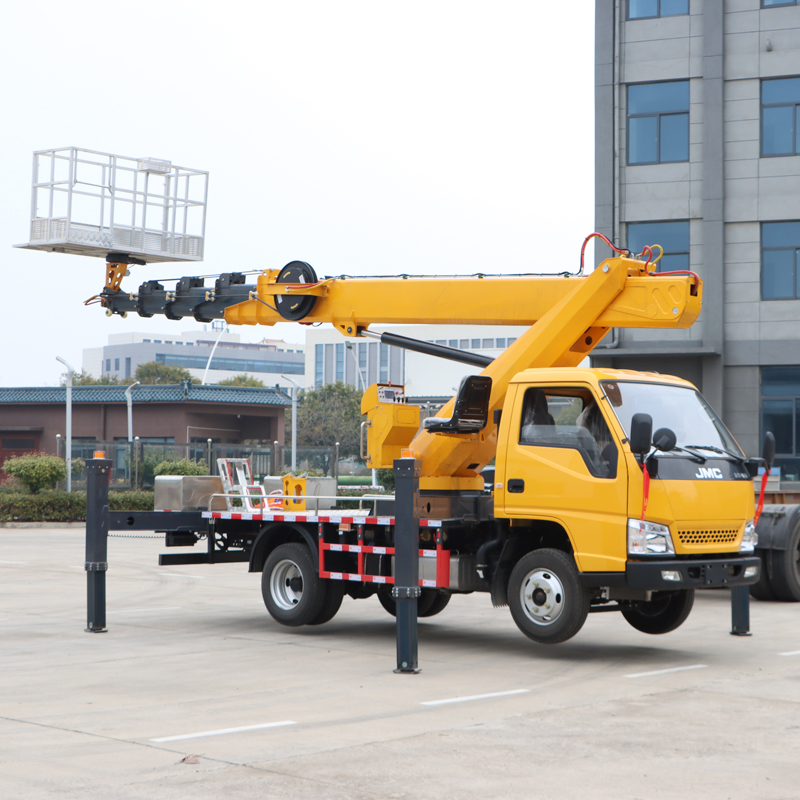
The second key parameter: Horizontal extension
Horizontal extension refers to the maximum distance that the center point of the working platform can move horizontally from the centerline of the equipment chassis when it is at its maximum height. For arm trucks, this represents how far their "arms" can reach.
It determines the operational coverage and flexibility of the equipment. The powerful horizontal extension capability means that you can stop the equipment at a fixed position to complete the operation of a vast area without frequently moving the chassis, greatly improving efficiency.
Guide to Avoiding Pitfalls When Purchasing
Evaluate the on-site layout: Carefully consider your typical work site. Are there a large number of obstacles that need to be "overcome"? Is the operation area concentrated or scattered? This will directly determine the intensity of your demand for horizontal extension capabilities.
Beware of "dead zones" : All aerial work platforms have an uncovered "dead zone" near the chassis. Equipment with stronger horizontal extension capabilities usually can better optimize and reduce this dead zone.
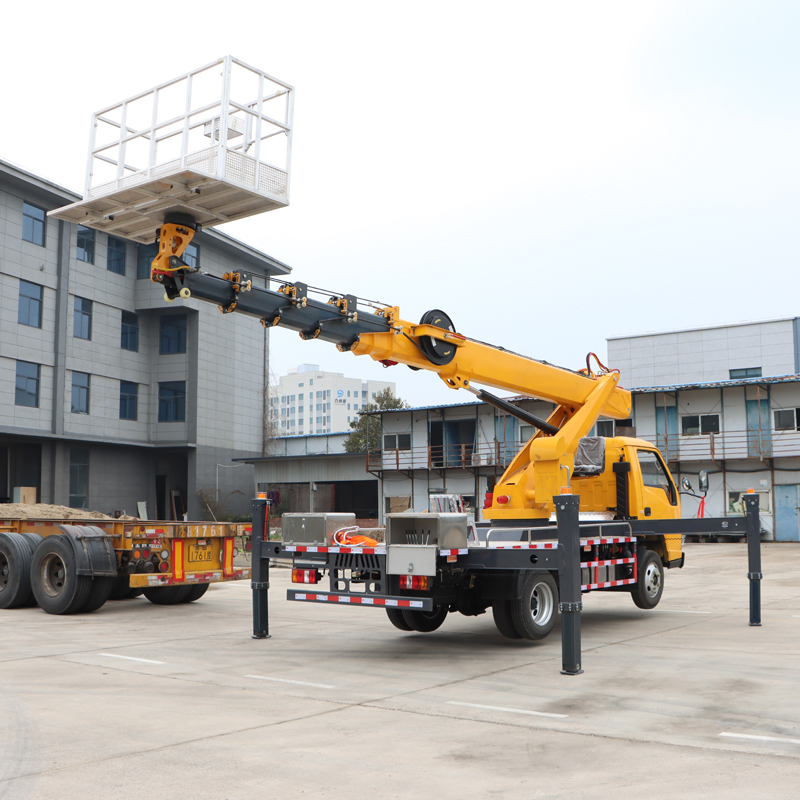
The third key parameter: Rated load capacity of the platform
The rated load capacity of the platform refers to the maximum weight that the working platform can safely bear at any height. This weight includes the total weight of the operator, his tools, equipment and all materials.
The red line of safety must not be crossed! Overloading is one of the most dangerous behaviors in high-altitude operations, which can easily lead to equipment overturning or structural damage, causing serious accidents. At the same time, load capacity also affects work efficiency - being able to carry more materials and personnel at one time means fewer lifting and lowering operations.
Guide to Avoiding Pitfalls When Purchasing
Calculate the "general ledger" clearly: Be sure to count all the weights that may appear on the platform during your daily operations: 1-2 operators (about 75-100 kilograms per person), tools (such as electric drills, welding machines), and the maximum amount of materials (such as lamps, plates).
Reserve increment: On the total weight you have calculated, add an additional safety margin of 20% to 30%, and then select the model with the corresponding load capacity. It is a wise move to leave room for the future business development of an enterprise.
Pay attention to the platform size: Load capacity is related to the platform size. A larger platform usually also means a higher load-carrying capacity, but it may also affect the passability and storage height of the equipment.
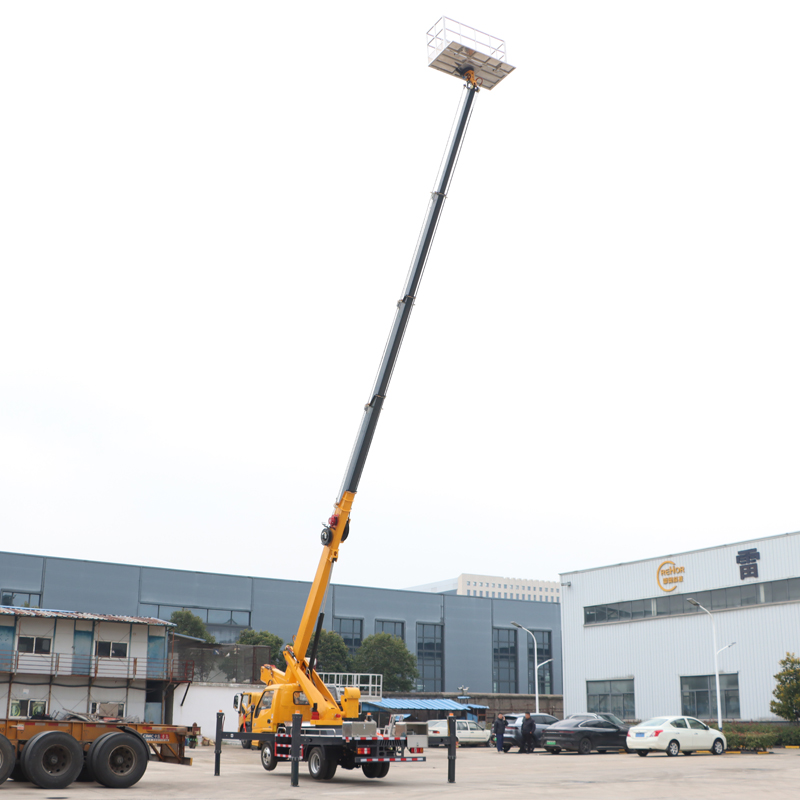
The maximum working height, horizontal extension and rated load capacity of the platform - these three parameters form the "iron triangle" for choosing a suitable aerial work platform. They are interrelated and jointly define the capability boundaries of a device.
Before making the final decision, please be sure to evaluate each candidate model based on your real working scenario with these three parameters. A clear list of requirements is the most powerful tool for you when communicating with sales.
